The aviation industry is preparing for one of the most significant evolutions in Safety Management Systems (SMS) since ICAO Annex 19 was first introduced.
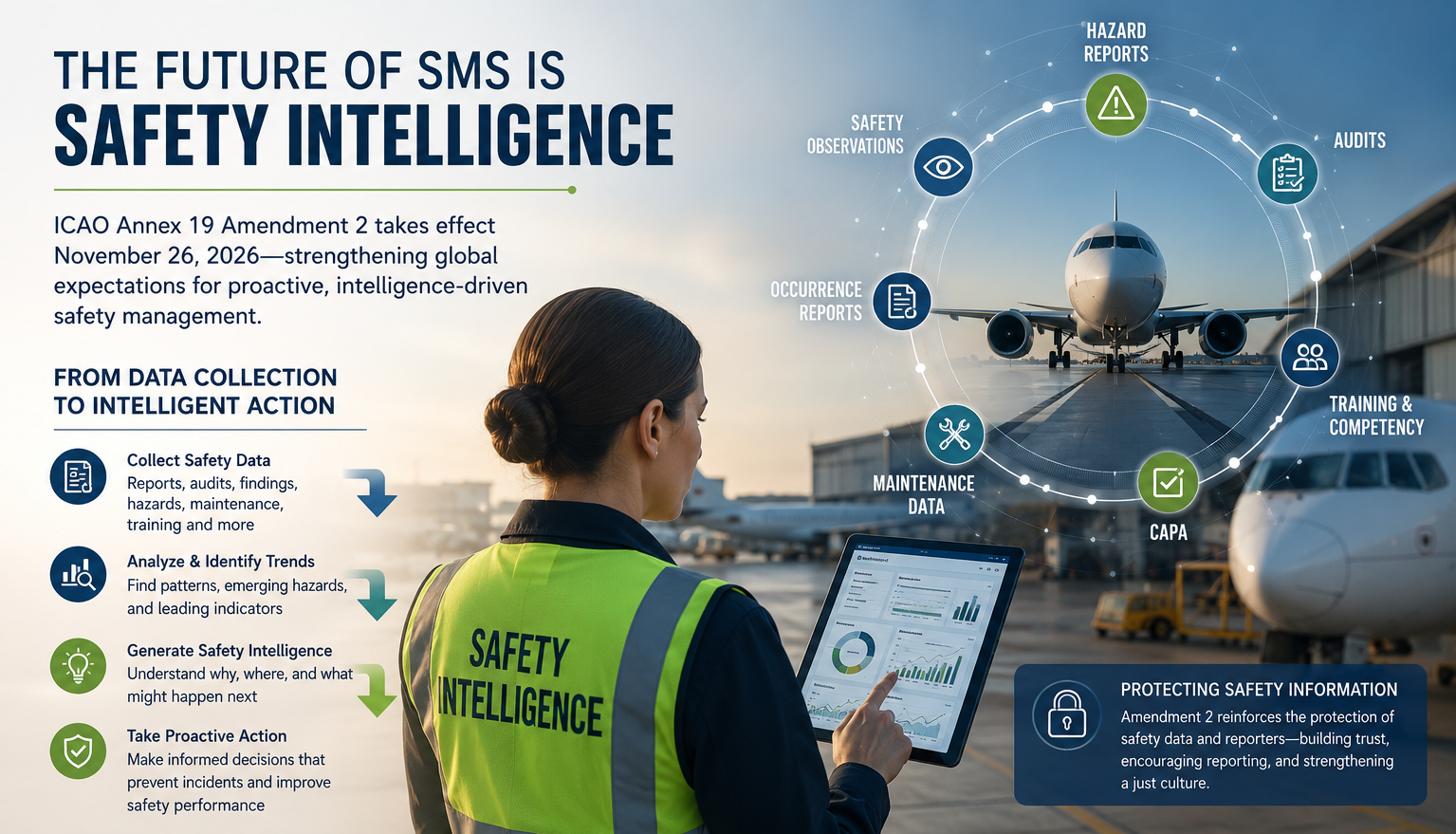
Beginning November 26, 2026, ICAO Annex 19 Amendment 2 raises the global expectation for how aviation organizations manage safety. The focus is no longer simply on collecting safety reports and maintaining compliance records. Instead, organizations are expected to transform safety data into Safety Intelligence—using information proactively to identify trends, predict risk, and make better operational decisions before incidents occur.
Moving Beyond Data Collection
For years, aviation organizations have gathered valuable safety information through:
- Hazard reports
- Internal audits
- Incident and occurrence reports
- Maintenance discrepancies
- Corrective actions (CAPA)
- Voluntary reporting systems
- Safety investigations
While collecting this information remains essential, Amendment 2 asks a much bigger question:
What is your organization learning from the data?
Simply storing reports is no longer enough. Organizations should be able to analyze information, recognize patterns, identify emerging hazards, and use those insights to reduce operational risk.
Introducing the Safety Data Collection and Processing System (SDCPS)
A key component of Amendment 2 is the expectation that States establish structured Safety Data Collection and Processing Systems (SDCPS) capable of collecting, protecting, processing, and analyzing safety information.
An effective SDCPS supports organizations by:
- Consolidating safety information from multiple sources
- Identifying recurring issues and trends
- Monitoring leading safety indicators
- Supporting risk-based decision making
- Protecting confidential safety information
- Providing meaningful safety intelligence to leadership
Rather than asking, “How many safety reports did we receive?”, organizations will increasingly ask:
- Why are these events occurring?
- Are they increasing?
- What changed?
- What risks are emerging?
- What action should we take before an accident occurs?
That shift represents the essence of Safety Intelligence.
What This Means for Aviation Organizations
Whether you’re an airline, repair station, maintenance organization, manufacturer, or aviation service provider, the future of SMS is becoming increasingly data-driven.
Organizations should begin evaluating whether their current systems can:
- Connect information across departments
- Analyze trends over time
- Measure Safety Performance Indicators (SPIs)
- Link training, audits, CAPAs, hazards, and investigations
- Support proactive risk management rather than reactive compliance
The organizations that embrace this approach will be better positioned to strengthen safety performance, improve operational decision-making, and demonstrate a mature safety culture.
A New Opportunity for Aviation Technology
As regulatory expectations evolve, aviation software must evolve with them.
Modern platforms should do more than store documents and training records. They should help organizations connect information across quality, training, safety, and operational processes to generate meaningful insights.
This is where integrated compliance technology becomes increasingly valuable—providing visibility into workforce readiness, training effectiveness, corrective action trends, audit performance, hazard reporting, and overall organizational risk.
Preparing for the Future
The November 2026 applicability date provides organizations with time to evaluate their SMS processes, strengthen data management practices, and ensure they are prepared for the next generation of aviation safety management.
The future of aviation safety isn’t simply about collecting more data.
It’s about transforming that data into knowledge, turning knowledge into action, and using Safety Intelligence to prevent tomorrow’s incidents before they happen.
At CD Training Academy, we’re closely monitoring these developments and continuing to build training and technology solutions that help aviation organizations move beyond compliance and toward proactive, intelligence-driven safety management.
Author: Alaina Yockey, CEO, CD Training Academy